One description of the job
Explain the vanity size, sink type, and material preference once. We connect you with a local contractor who does bathroom countertop work.
Describe the vanity top you want once, and we'll connect you with a local Seattle contractor who handles bathroom countertop replacement and installation.
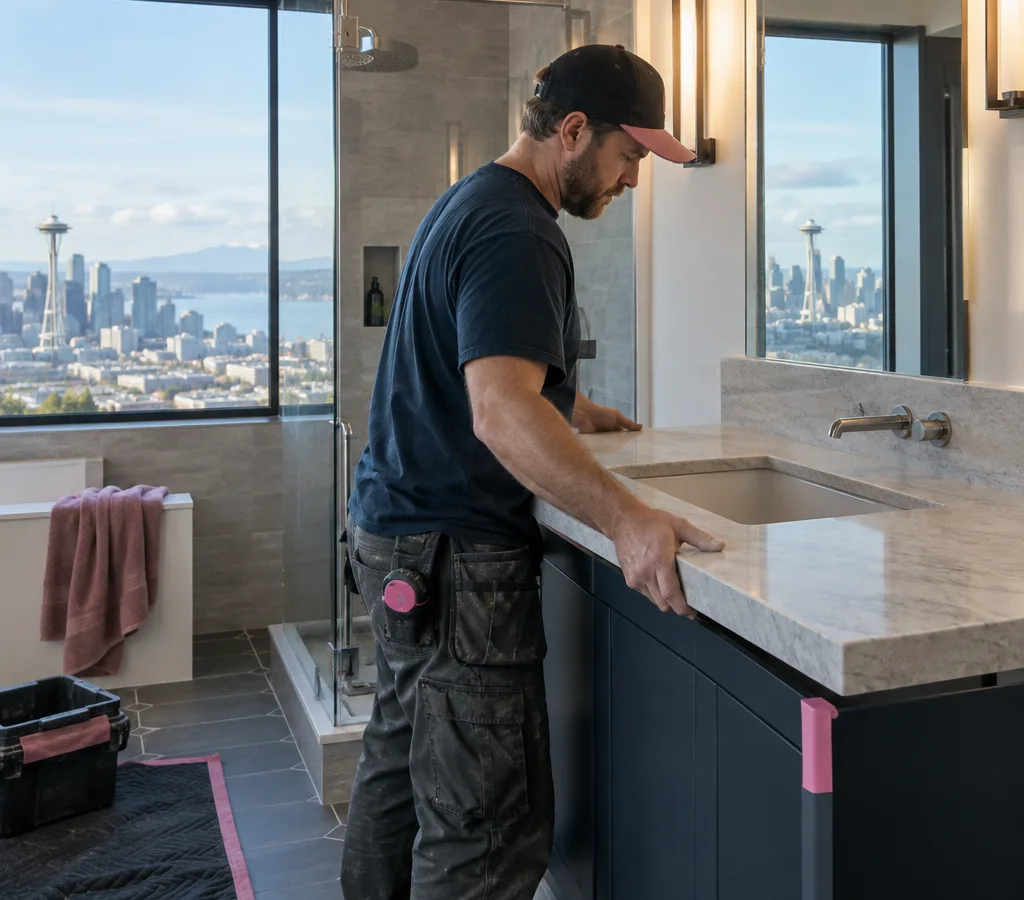
Bathroom countertops do more than hold a sink. They deal with daily moisture, cosmetics, hot tools, and constant wiping. When homeowners search for bathroom countertops Seattle, they're usually trying to solve one of three problems: the old top is damaged, the sink setup needs to change, or the finish no longer fits the room. Our main Seattle bathroom remodel page has the full picture.
A typical bathroom countertop project includes:
Seattle homes often have older walls that aren't perfectly straight, especially in bathrooms that have seen multiple updates. That's why a real template matters for stone and other rigid materials. A contractor will also look at the vanity cabinet itself, because the best countertop in the world won't sit flat if the cabinet is racked, water-swollen, or not properly supported.
If this countertop work is part of a larger plan, it can help to think through the order of operations with the contractor you're connected with. Many homeowners roll a vanity top replacement into bathroom remodeling in Seattle so plumbing, paint, and lighting changes aren't done twice.
CALL NOW: 425-699-8933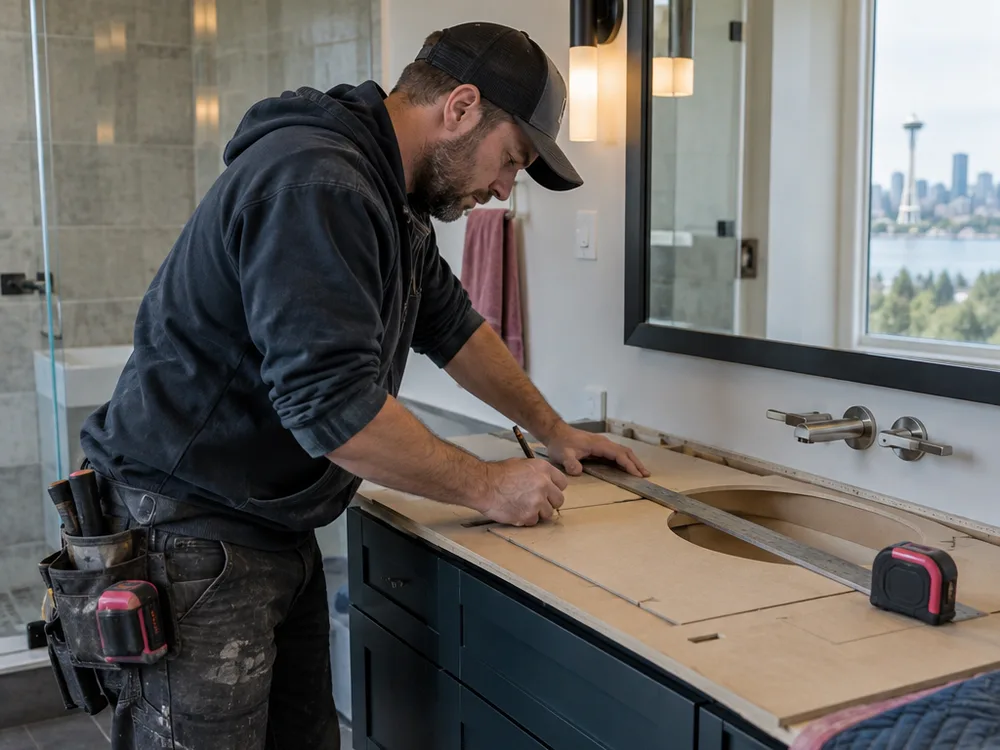
Explain the vanity size, sink type, and material preference once. We connect you with a local contractor who does bathroom countertop work.
Seattle bathrooms often have out-of-square walls and tight clearances. The contractor you speak with can plan templating, seam placement, and backsplash details around what's actually in the room.
You talk directly with the contractor about options, scheduling, and the quote. If it's not a fit, you're not committed.
Quartz, granite, solid surface, porcelain, laminate, and wood all behave differently around water and heat. A contractor can walk through tradeoffs for your bathroom use.
If the sink, faucet, or vanity cabinet is changing too, the contractor can line up the steps so the plumbing reconnect and countertop install happen in the right order.
Tell us what you're replacing—vanity top, sink, or backsplash—your bathroom location in Seattle, and anything unusual like a floating vanity or a wall-mounted faucet.
We connect you with a local contractor who handles bathroom countertops and can talk through material, sink type, and edge or backsplash options.
The contractor confirms cabinet condition and exact dimensions, checks the walls for out-of-square, and plans seams and overhangs. If a slab is involved, they'll discuss how pattern movement may land.
Cutouts are made for the sink and faucet holes, edges are finished, and any required sealing or polishing steps are handled per material.
The new top is set and leveled, seams are finished, and plumbing is reconnected. The contractor will also explain care, what cleaners to avoid, and whether resealing is needed later.
If you're comparing bathroom countertop materials or trying to match an existing vanity, a quick phone call is the easiest way to get connected with a local contractor who can size it up and talk through the details.
CALL NOW: 425-699-8933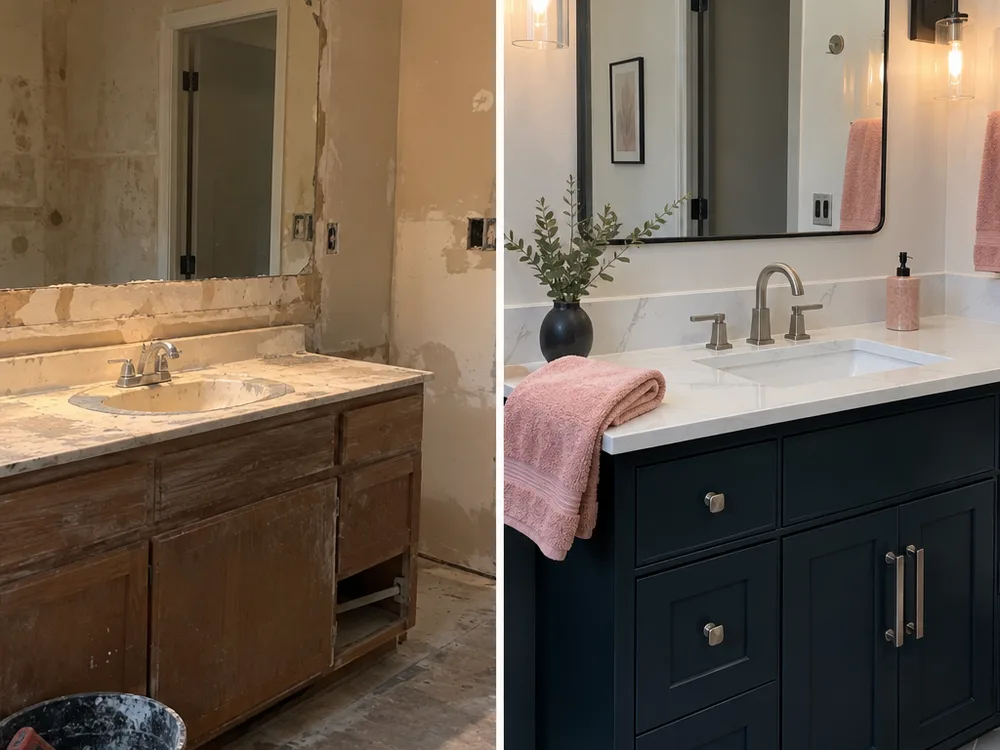
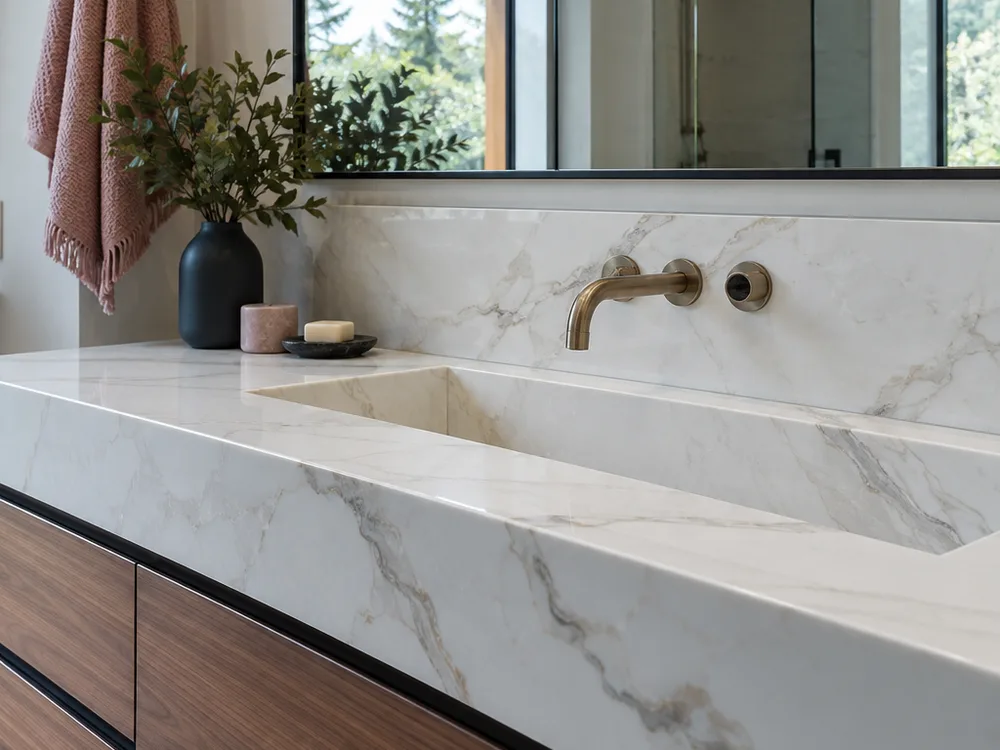
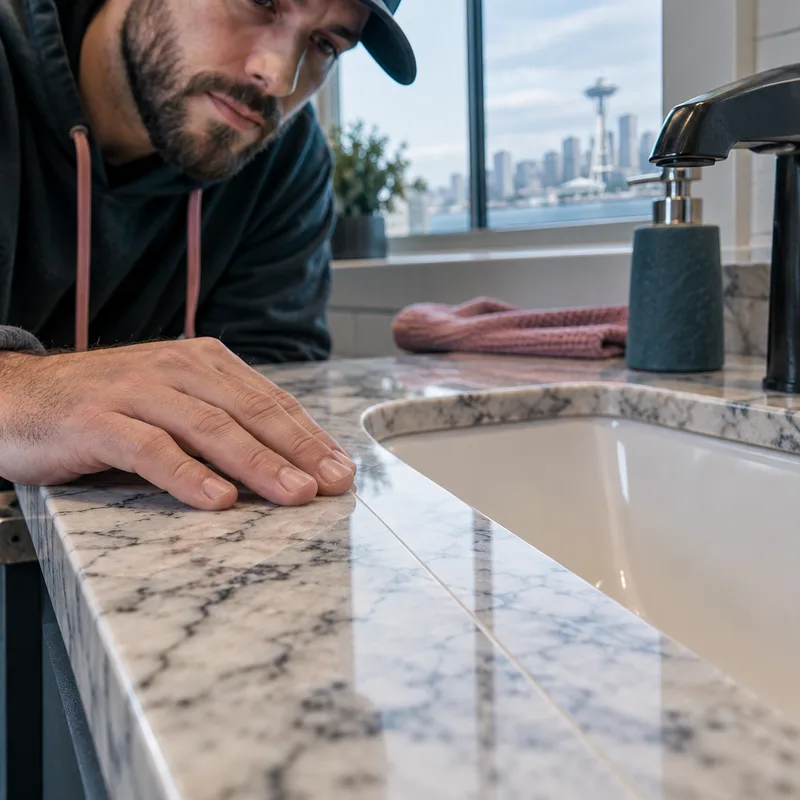
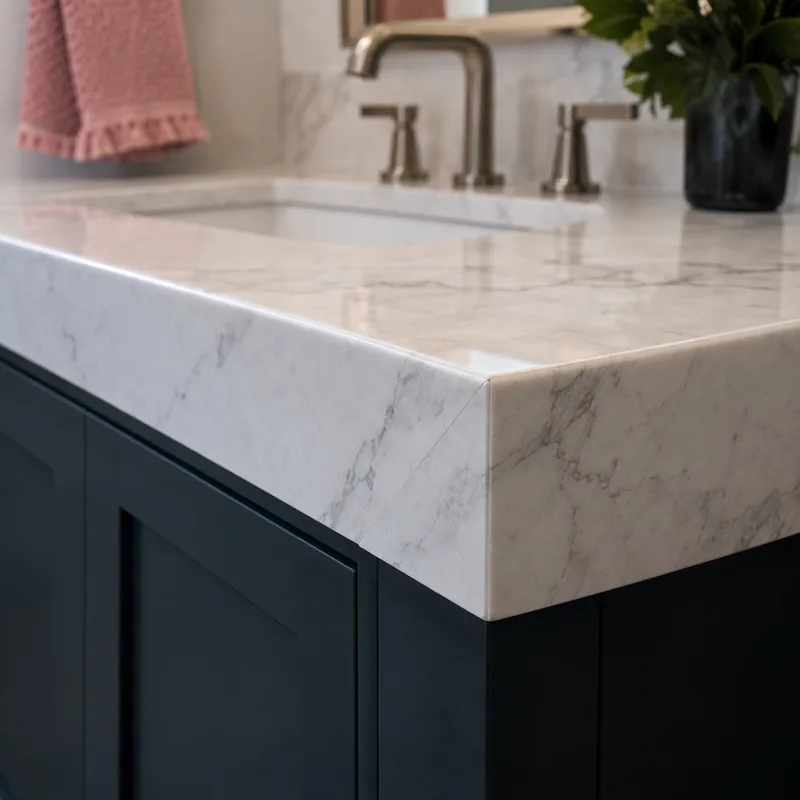
Have the vanity width, approximate depth, and a few photos of the current top and sink area ready. It also helps to know whether you want an undermount or drop-in sink, if you're keeping the existing faucet, and whether there's any wall damage or tile that meets the countertop edge.
Often yes, as long as the cabinet is solid, level, and not swollen from past leaks. The contractor will check for movement, water damage around the sink area, and whether the cabinet has the right support for a heavier top like stone or concrete.
Rigid materials and tight fits usually call for templating because walls and corners are rarely perfectly square. For more forgiving materials or simpler drop-in tops, measuring can sometimes work, but the contractor will decide based on the material, the wall conditions, and how tight the reveals need to be.
The common options are undermount, drop-in, vessel, and integrated sinks. Undermount sinks look clean and are easy to wipe into the basin, but they require compatible materials and proper support; drop-in sinks can be simpler when the vanity cabinet or plumbing layout limits choices.
It depends on how the wall is finished and how water is used at that sink. If the wall is painted drywall or there's no tile behind the sink, a short backsplash can protect the wall and simplify cleaning; if there's already tile, the countertop edge may be finished to meet it cleanly.
The most common issues are hidden water damage in the vanity top rails, uneven walls that create gaps, and plumbing that doesn't line up with the new sink depth. A contractor will look for leaks, confirm shutoffs, and plan the install so the cabinet and wall finishes aren't damaged during removal.
Some countertop installers coordinate the plumbing steps directly, and others work alongside a plumber depending on the scope and local preferences. When you're connected, describe whether the faucet and sink are changing so the contractor can tell you how they handle disconnects, reconnections, and any drain or shutoff updates.
Use mild cleaners, wipe standing water, and avoid leaving harsh products around the sink rim. The contractor can tell you whether your material needs periodic sealing, which cleaners to avoid—especially on natural stone—and what to do if you notice staining or dull spots over time.
Describe your bathroom countertop project once and get connected with a local Seattle contractor who can walk through materials, sink options, and what the install will take in your space.